


Updated 7 November 2026
At a glance
- The Gulf of Poets is the Gulf of La Spezia: it stretches from Portovenere and its islands in the west to Lerici and Tellaro in the east.
- The name was coined by the playwright Sem Benelli in 1910, in memory of the poets who had lived here, from Byron to Shelley.
- Portovenere and the islands of Palmaria, Tino and Tinetto have been a UNESCO World Heritage Site since 1997, together with the Cinque Terre.
- Without a car you get around by bus from La Spezia station and, from late March to 1 November, by boat.
- Tino island is a military zone: you can only visit it around 13 September, the feast of San Venerio.
- In 2025 Portovenere recorded 29 tourist nights per resident, Monterosso almost 212: crowds here are a different story.
Find out why it's called the Gulf of Poets
On maps it is the Gulf of La Spezia. The name everyone uses dates from 1910, when the playwright Sem Benelli paid tribute to the scientist Paolo Mantegazza, who had died in San Terenzo, and called these waters the “Gulf of Poets”. He was thinking of the writers who had lived and written here: Byron, Shelley and, long before them, Dante and Petrarch, who mention Lerici in their works.
In the spring of 1822 Percy Bysshe Shelley and his wife Mary, the author of Frankenstein, rented Villa Magni, a white house by the sea in San Terenzo. On 8 July Shelley drowned in a storm while sailing home from Livorno. His friend Lord Byron, who loved swimming in this sea, is remembered in Portovenere by the grotto that bears his name: according to tradition, he swam across the gulf to San Terenzo to visit them.
A century later, others followed. D. H. Lawrence lived in Fiascherino, between Lerici and Tellaro, in 1913 and 1914, and Mario Soldati chose Tellaro for the last years of his life. Every year, at the end of August, a swimming race, the Byron Cup, repeats the crossing from Portovenere to San Terenzo.
Start in Portovenere
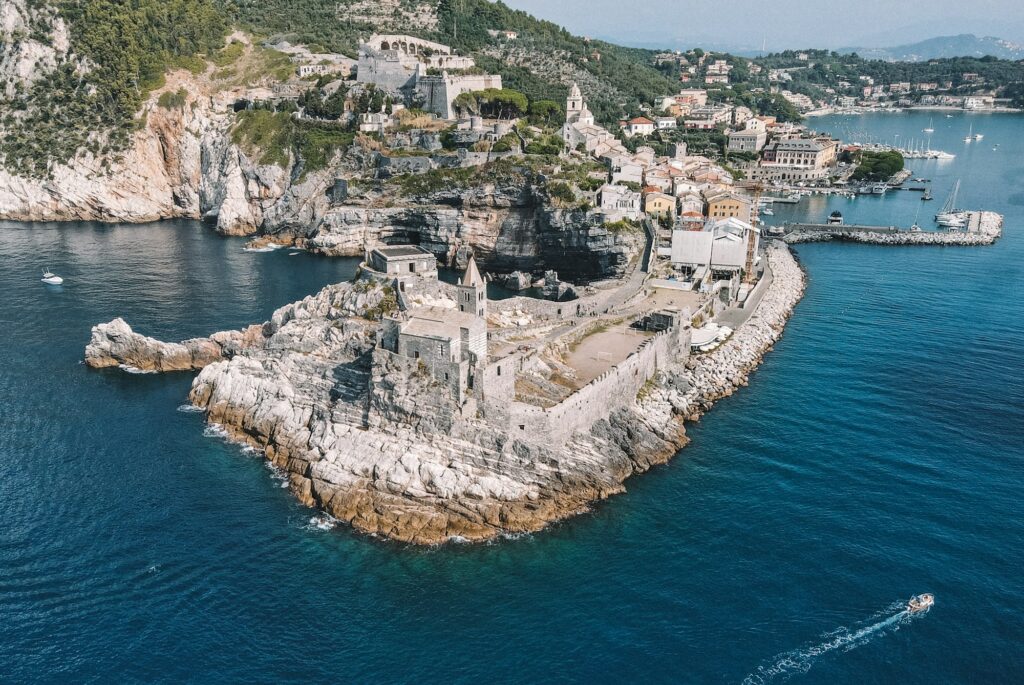
Portovenere closes the gulf to the west. From the harbor, with its tall colorful houses lined up along the water, the narrow lanes climb toward Castello Doria and the church of San Lorenzo. At the end of the village, on the rocky point, stands the church of San Pietro, striped in black and white, with the open sea on one side and the gulf on the other.
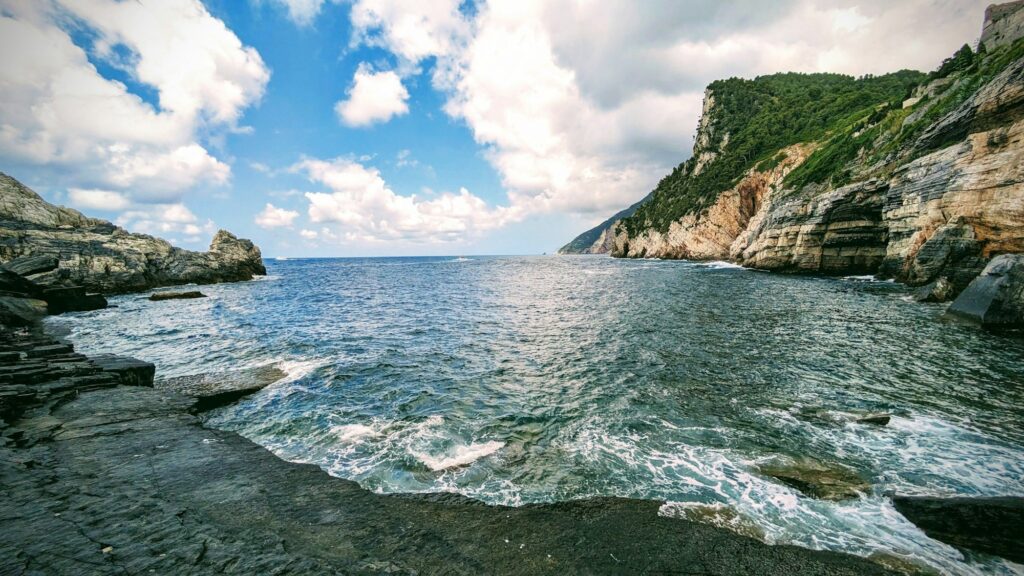
Below San Pietro lies Byron's Grotto, a cove among the cliffs where many people swim off the rocks in summer. On the evening of 17 August, for the feast of the Madonna Bianca, the village turns off its lights and glows with thousands of torches all the way to the point. And in 2026 Portovenere's crew won the Palio del Golfo, the rowing race held on the first Sunday of August, for the first time in 49 years.
What to see in Portovenere in two days
Cross the channel to Palmaria
Across from the harbor, beyond a narrow channel, lies Palmaria, the largest of the three islands. From Portovenere you get there in a few minutes with the local boatmen, who run all year, with fewer crossings in winter; from June to the end of September there are also boats from La Spezia and Lerici.
The island is part of the Porto Venere nature park, with trails through Mediterranean scrub and along the cliffs. The full loop takes a few hours on foot; if you have less time, head down to Pozzale beach, also reachable by boat, or go and see the abandoned quarries of Portoro, the black, gold-veined marble that was quarried only in this area.
You'll also find Portoro, “the rarest marble in Italy”, at Capitolare Tower: it's the dining room table. The other two islands are best seen from the sea. Tino, with its lighthouse and the remains of the abbey of San Venerio, patron saint of the gulf, is a military zone and only opens around 13 September; Tinetto is little more than a rock. The boat tour of the three islands leaves from La Spezia, Lerici and Portovenere.

Move over to the Lerici side
On the opposite shore, Lerici huddles around its harbor beneath a pentagonal castle that dominates the bay. Inside is the Geopaleontological Museum, with fossils and dinosaur footprints found in the area, but most people climb up mainly for the view over the whole gulf. From the harbor square, the seafront promenade leads to San Terenzo, from one castle to the other.
San Terenzo has a sandy beach, a small castle by the sea and, on the border with Lerici, Villa Magni, Shelley's last home. The garden next to it, Shelley Park, is now a small literary park with installations devoted to his verses. Between the two villages lies Venere Azzurra beach, served by the buses from La Spezia.

Climb up to Tellaro and Montemarcello
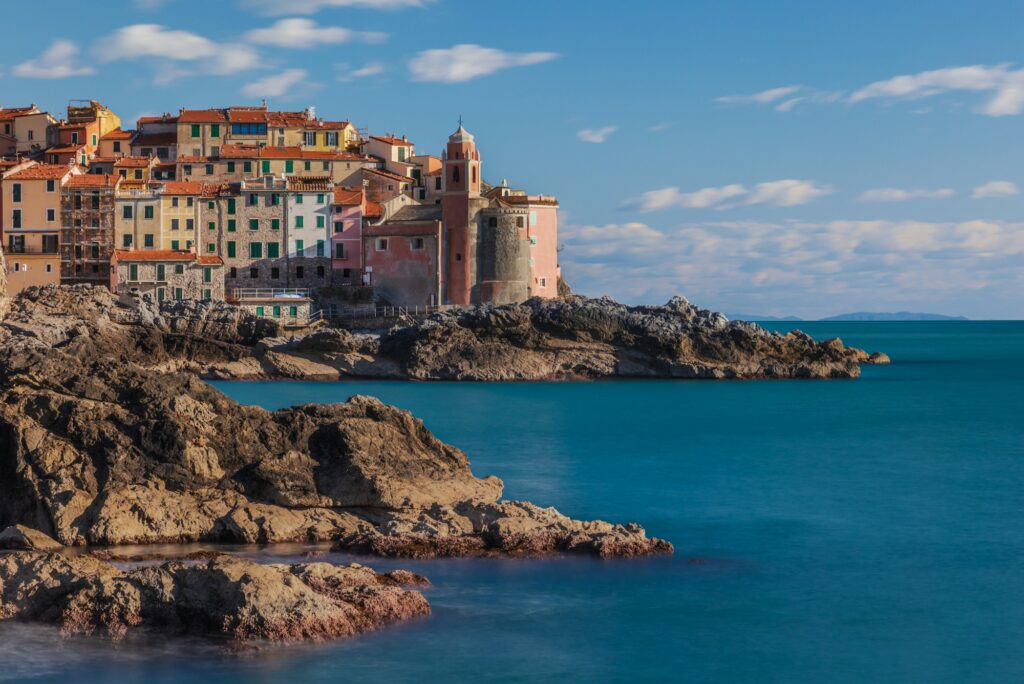
Tellaro is the last village on the gulf, clinging to a spur of rock: narrow houses, steep steps and the church of San Giorgio overlooking the sea. It's one of the Most Beautiful Villages in Italy and has a legend: one night in 1660 an octopus, wrapped around the bell rope, is said to have rung the bell and woken the village before a pirate attack. In August the octopus festival celebrates it, and the dish to try is polpo alla tellarese, octopus with potatoes and olives.
From Tellaro a trail climbs through olive groves to Montemarcello, another of the Most Beautiful Villages in Italy, inside the Montemarcello-Magra-Vara nature park. Before Tellaro, a flight of almost two hundred steps leads down to the coves of Fiascherino, the ones that enchanted Lawrence.
Get around without a car
The gulf is easy to explore without a car, and in summer it's the smart choice: the roads are narrow and the car parks in Portovenere and Lerici fill up early. Arrive by train at La Spezia Centrale station and continue by bus or boat.
| Route | Transport | Notes |
|---|---|---|
| La Spezia – Portovenere | ATC bus 11/P | About 30 minutes |
| La Spezia – Lerici and San Terenzo | ATC bus L or S | About 30 minutes |
| Portovenere – Palmaria island | Local boatmen | A few minutes, all year |
| Lerici – Portovenere and Palmaria | Boat, line 01 | Late March to 1 November |
2026 season information. With Trenitalia's train + bus ticket, the bus ride from La Spezia station to Lerici or Portovenere cost €2.50. The 2027 price list comes out in January 2027.
Boats to the Cinque Terre also leave from La Spezia, Lerici and Portovenere: on a clear day you can combine the gulf and the five villages without ever getting in a car.
Portovenere and the Cinque Terre by boat
Choose when to go
The best months are May, June and September: long days, boats running and fewer people than in August. July and August are festival months: the Palio del Golfo in La Spezia on the first Sunday of August, the Madonna Bianca in Portovenere on the 17th, the octopus festival in Tellaro. In September there's the rare chance to land on Tino.
In winter the gulf slows down. After 1 November many boat services stop, but the boats to Palmaria keep running and the villages stay lively. And the numbers explain the difference from the Cinque Terre: in 2025 Portovenere recorded 29 tourist nights per resident, against almost 212 in Monterosso.
Taste the gulf
The Gulf of La Spezia is home to muscoli, as mussels are called here, farmed in its waters for more than a century: they're eaten stuffed, in tomato sauce or alla marinara. Then there's polpo alla tellarese, farinata and, to drink, Vermentino from the Colli di Luni, grown on the hills between Liguria and Tuscany, a few kilometers from Lerici.
Stay in Portovenere, at the tip of the gulf
To explore the gulf at your own pace, the most convenient base is Portovenere: boats to Palmaria and to Lerici and the Cinque Terre leave from here, and in the evening, when the day visitors leave, the village goes back to its residents. Capitolare Tower, built between 1113 and 1161 at the entrance to the village, is the oldest tower in the world you can sleep in: a private suite for one party at a time, up to four guests, with a terrace over the gulf, breakfast and covered parking included. On request, our chef cooks dinner for you in the Tower.

Frequently asked questions
What can you see in the Gulf of Poets in one day?
Spend the morning in Portovenere and walk out to San Pietro, then take the boat to Palmaria or the tour of the three islands. In the afternoon, catch the boat to Lerici, climb up to the castle and stroll along the seafront to San Terenzo. Tellaro deserves half a day of its own.
Can you visit the Gulf of Poets without a car?
Yes. From La Spezia station, buses run to Portovenere, Lerici and San Terenzo, and from late March to 1 November boats link the villages, Palmaria and the Cinque Terre.
How do you get to Palmaria island?
Only by sea. From Portovenere the local boatmen cross the channel in a few minutes all year round; in summer there are also boats from La Spezia and Lerici, landing at Terrizzo and Pozzale.
Can you visit Tino island?
Only around 13 September, the feast of San Venerio, with special boat trips. The rest of the year it's a military zone and can only be seen from the sea, on the tour of the three islands.
What are the best beaches in the gulf?
For sand, San Terenzo and Venere Azzurra, both easy to reach by bus. For clear water and fewer people, the coves of Fiascherino near Tellaro and Pozzale beach on Palmaria. In Portovenere people swim off the rocks below Byron's Grotto.
Is it better to stay in Portovenere or Lerici?
It depends on how you want to spend your days. Lerici is handy for the sandy beaches and Tellaro; Portovenere is the starting point for Palmaria, the islands tour and the boats to the Cinque Terre, and it's smaller and quieter.
Sources: Municipality of Lerici and lericicoast.it (literary itinerary, Tellaro, Shelley Park); Navigazione Golfo dei Poeti (routes and 2026 season); ATC Esercizio and Trenitalia (buses and 2026 train + bus ticket); lecinqueterre.org (Palmaria island); UNESCO; ISTAT, nights spent in 2025 processed by DatiTuristici.it; La Nazione (2026 Palio del Golfo). Cover photo by Samuele Bertoli on Unsplash.


